

System Requirements
- OS: macOS 13 (Ventura) or later
- Hardware: Apple Silicon (M1 or later)
- Disk Space: At least 4.85 GB recommended per installation
Download Comfy Desktop
Download the latest installer for macOS. The page will automatically detect your platform.
Installation
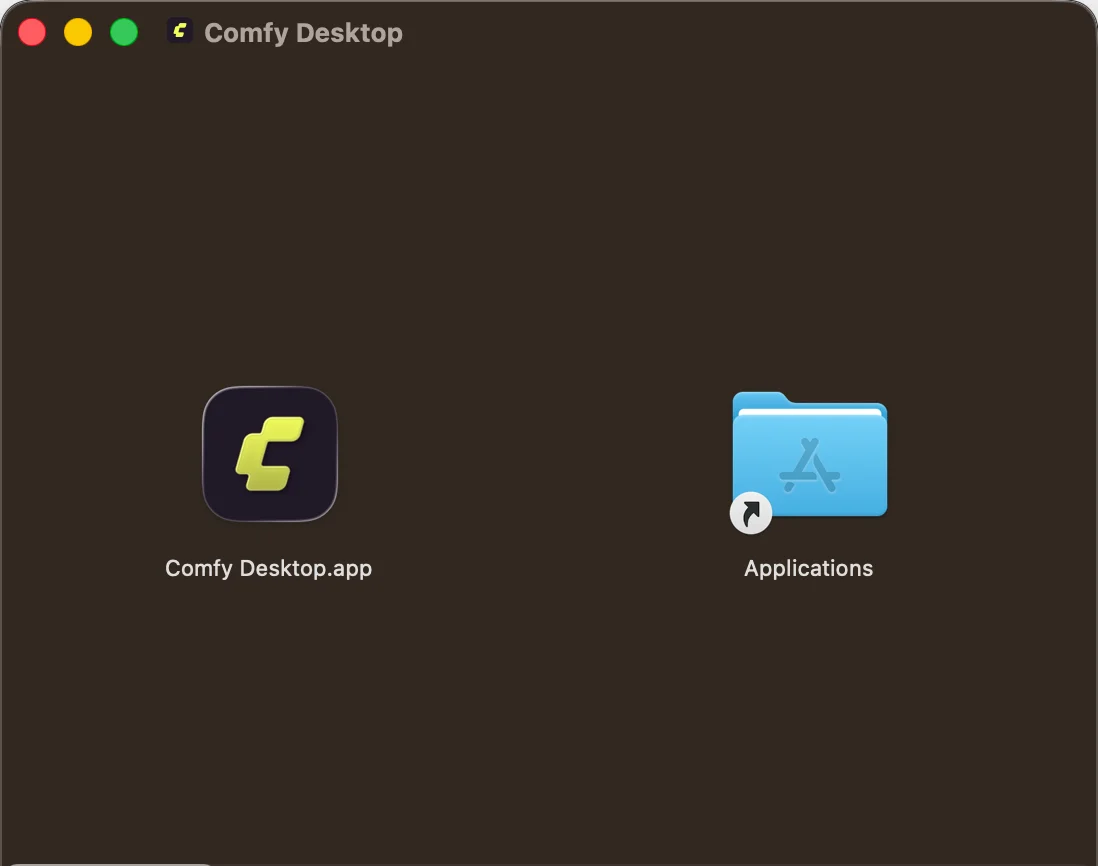
- Open the downloaded
.dmgfile - Drag Comfy Desktop into the Applications folder
- Launch it from Launchpad or Spotlight
Next Step: Using Comfy Desktop
Once installed, learn how to create instances, manage installations, and configure settings.
Updating Comfy Desktop
Comfy Desktop checks for updates a moment after it starts and every 10 minutes while it runs, and each check downloads what it finds. Neither can be turned off. The only setting controls whether an update then installs without asking.Automatic updates
Automatically install Desktop updates is on by default. The title bar follows the download: Downloading update… first, then Desktop Update Ready. With the setting on, Comfy Desktop applies the update without asking: when you quit the app on macOS, at the next launch on Windows. Click the pill to restart into it right away instead. Restart & Update quits Comfy Desktop and reopens the new version, so anything running in the app closes with it. Later closes the prompt and leaves the update to apply on its own — that automatic apply only happens while this setting is on.Manual update
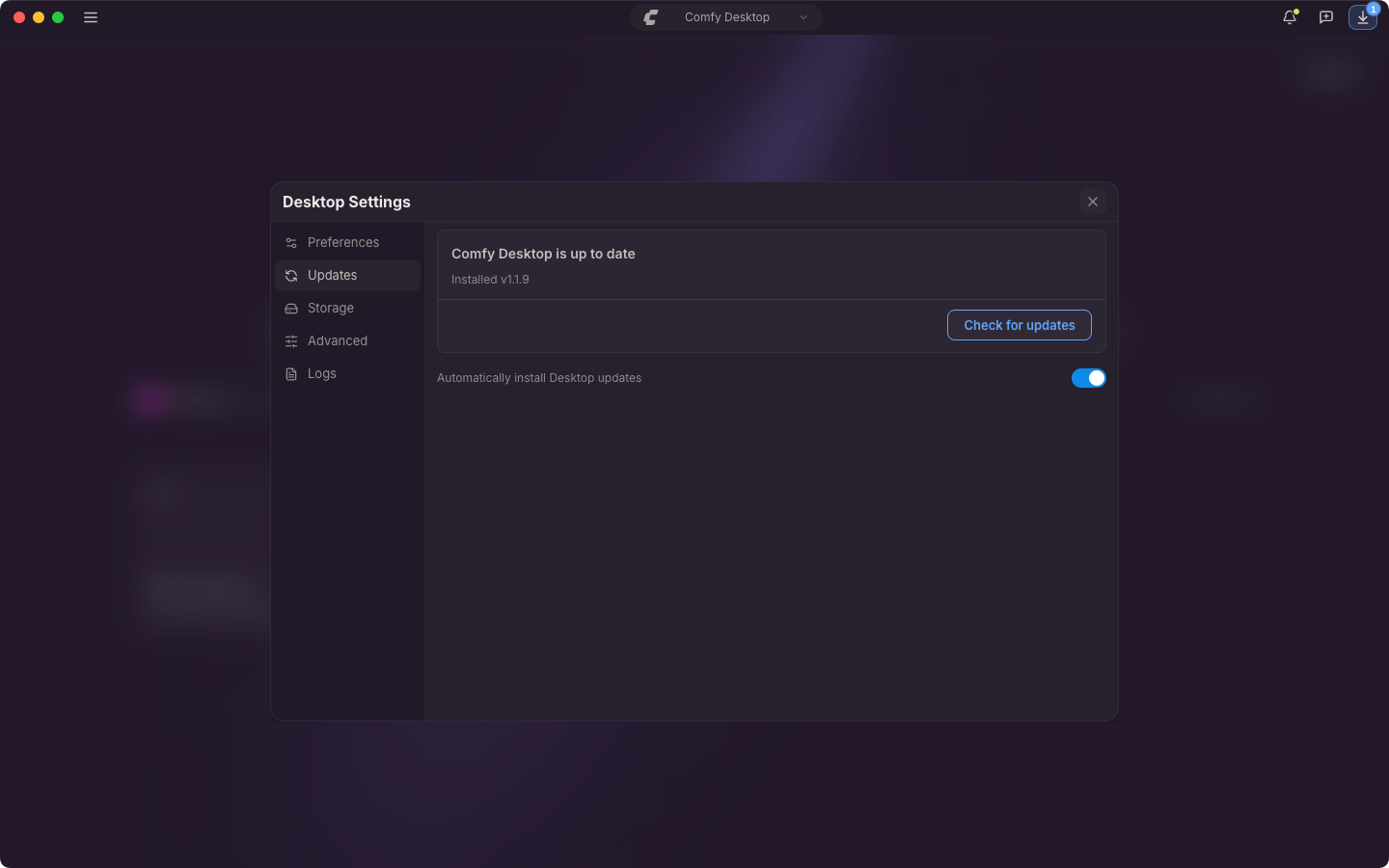
- Click ☰ and choose Desktop Settings.
- Open the Updates tab.
Uninstalling
Remove Comfy Desktop
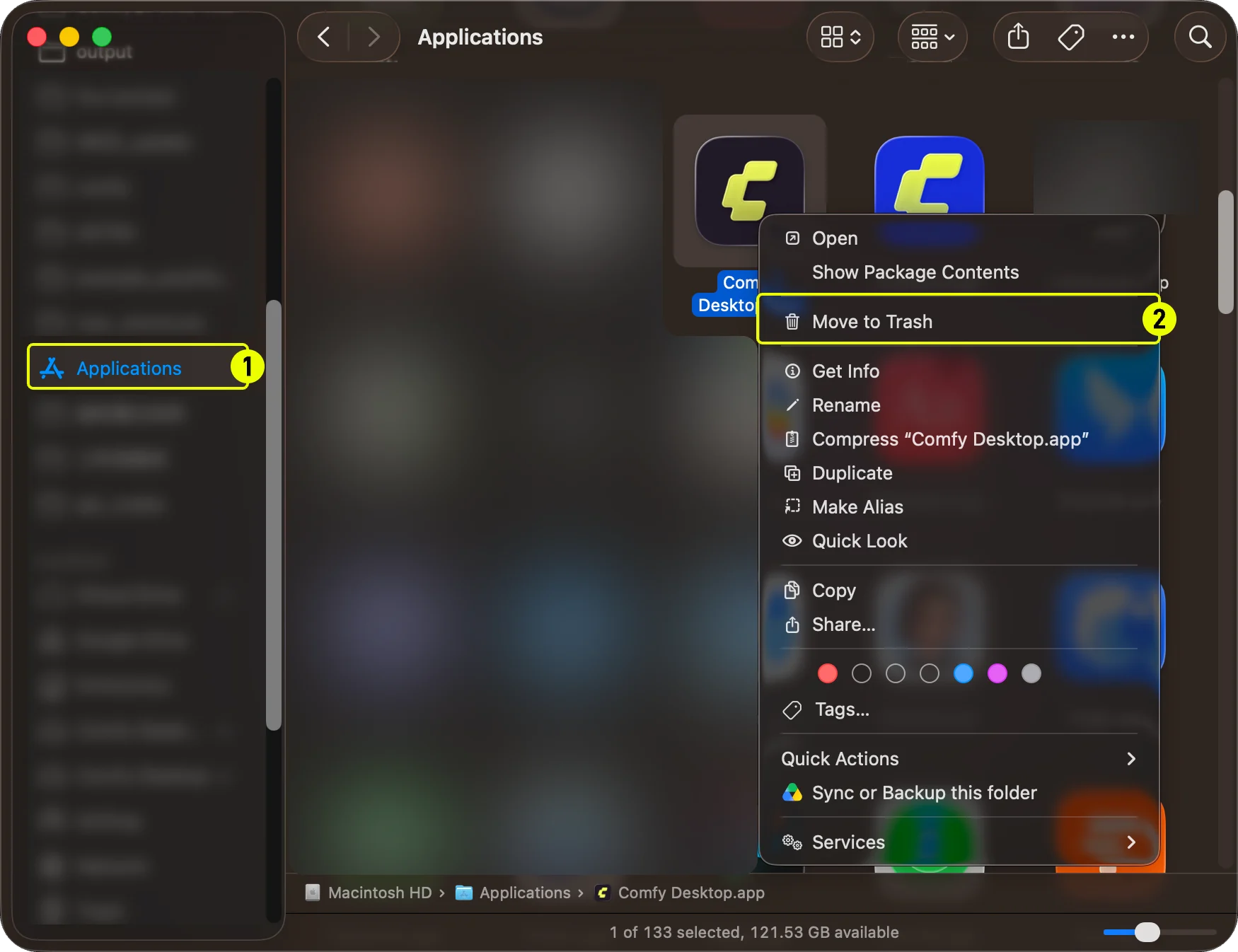
- Open Applications folder in Finder
- Right-click Comfy Desktop and select Move to Trash
What Uninstalling the App Does NOT Remove
Uninstalling Comfy Desktop only removes the launcher app itself. The following data is not removed and must be deleted manually if you want a complete cleanup:
To fully remove everything:
- Delete the app data folder:
~/Library/Application Support/Comfy Desktop - Delete the logs folder:
~/Library/Logs/Comfy Desktop - Delete individual installations from within the app, or manually delete
~/ComfyUI-Installsplus any custom installation directories you configured - Delete the shared model library at
~/ComfyUI-Shared(only if you no longer need these files)
If Comfy Desktop Starts Up Broken
A manual update can leave Comfy Desktop launching with no styling, missing translations, or buttons and dropdowns that do nothing. The usual cause is a Chromium profile or a cached pending update left behind by the previous version. Quit Comfy Desktop first, then run the reset script from the Comfy-Desktop repository:~/ComfyUI-Installs and your shared models in ~/ComfyUI-Shared stay on disk, but the file that lists the installations is deleted with the rest of the app data, so you may have to add them back with Add Existing Instance on the next launch. The script also reports any extra copies of the app it finds on the Mac without deleting them, because a second copy in the Dock is a common reason a reset seems to change nothing.
Where the App Log Is
If the reset does not fix the problem and you want to report it on the Comfy-Desktop issue tracker, the file to attach isapp.log in ~/Library/Logs/Comfy Desktop. That folder is one of the paths the reset deletes, so copy it somewhere else before you run the script. Comfy Desktop writes a new app.log at each launch and keeps the 50 most recent earlier files beside it as app.log_<timestamp>.log, so pick the file from the session that failed. Each file rotates once it reaches 5 MB, so a long session can span more than one file.